How You Sound?
James Baldwin in Los Angeles, California, 1964.
Courtesy of the Los Angeles Times Photographic CollectionThis essay was originally written to be released with Meshell Ndegeocello’s acclaimed 2024 LP, No More Water: The Gospel of James Baldwin (Blue Note). Ndegeocello has now moved on from performing Baldwin material. But we’re honored to publish this piece in homage to her work—and in anticipation of the great bassist’s concert at Pioneer Works on March 29, 2026.
— The Editors
In the old days—in the way back times, way back in what the American author, James Baldwin, called "the old country," or the American South—folks carried their dead with them. Took those shadows and memories down roads and into attics, let them romp and breathe by riverbanks in Georgia, told them stories in Maryland, gossiped with them for a spell in Pensacola, and Washington, D.C. The point was you didn't let the dead stay dead: they were your legacy, and your voice, and in talking to, about, and through them, you learned how you sounded as well, where those multitude of voices sat in your own throat.
You can hear the voices the gone but not gone leave us with in Meshell Ndegeocello's altogether brilliant sonic theatre piece, No More Water: The Gospel of James Baldwin, a work that contains a cavalcade of voices, sounds, and unique utterances around one subject: James Baldwin, whose centenary we celebrated in 2024. But is celebration really the word? In Ndegeocello's hands and hearing, Baldwin was always there, an astonishing presence whose voice—whose multitude of voices as novelist, playwright, poet, screenplay writer, and especially essayist—always talked to us, if we only listened.
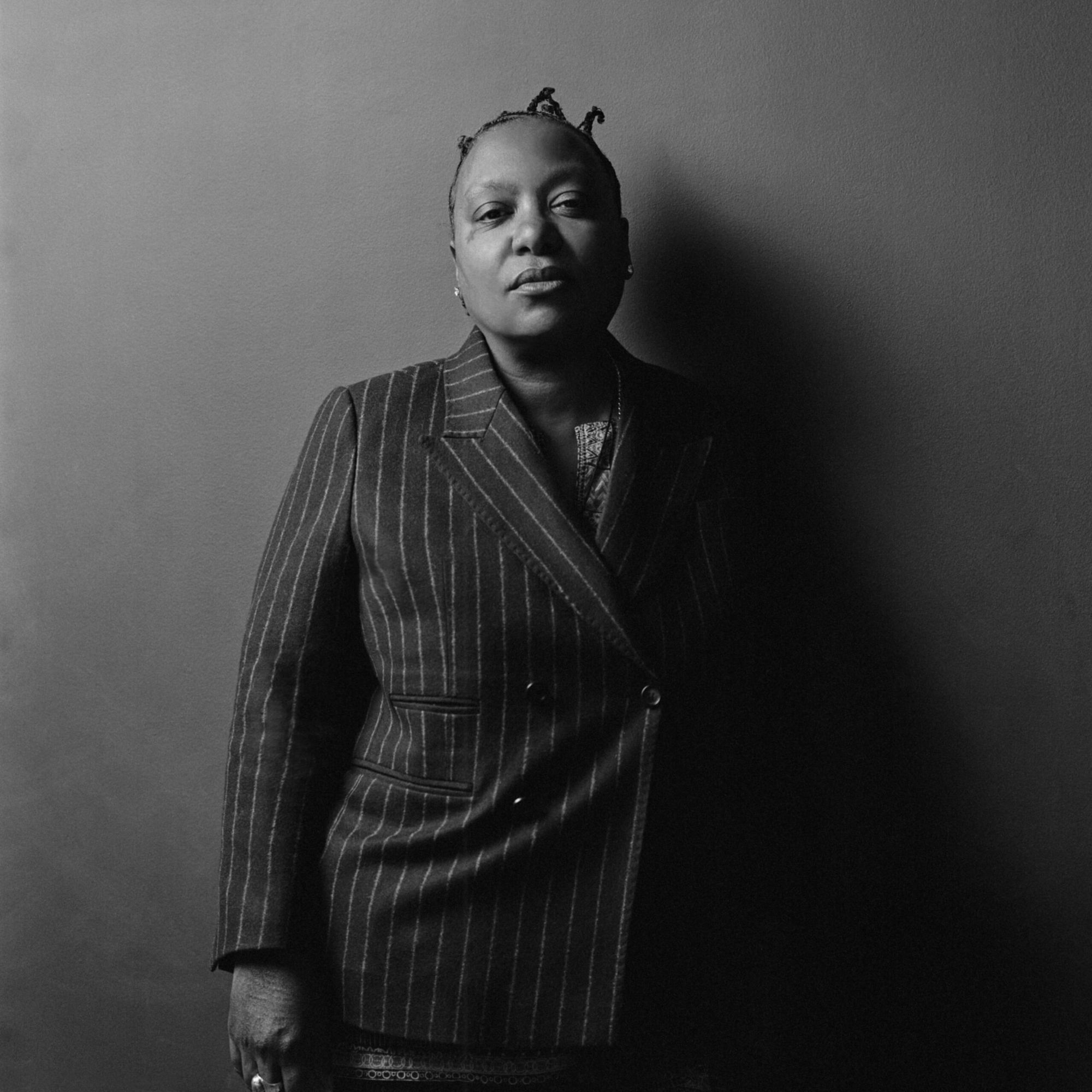
Meshell Ndegeocello, 2016.
Photo: Andre WagnerBorn and raised in Harlem, Baldwin's writing created a universe rooted in the real: the reality of his queerness, his race, the fecundity of his ever expanding mind and heart, and the reality of his ancestors, all the voices that came before and helped make his voice. These included Henry James, his mother Berdis Baldwin's comforting sound, the wrath, piety, and drama, in the King James Bible, gospel music, the critic Edmund Wilson —and, too, the songwriter Charles Albert Tindley. Tindley may not have been a direct influence on Baldwin. But you can hear his retroactive influence on the writer in Tindley's hymn, "Take Your Burden to the Lord and Leave it There," a hymn Baldwin, the boy preacher—he preached from the time he was 14; when he was 17, he stopped—might very well have sung on one of those Harlem Sundays, his white shirt stiff with starch and his heart beating out the rhythm as he clapped his hands, flashed a tambourine:
Take your burden to the Lord and leave it there.
If you trust and never doubt, He will surely bring you out.
Take your burden to the Lord and leave it there.
But where could Baldwin leave his burden? Raised in the Christian church by a preacher father who embraced Jesus but who could not love his adopted son, Baldwin competed for his father's attention by becoming a preacher, too, an authoritative role he used, in the end, to distance himself from the terrifying complications of his own blackness and maleness in a country that did not love either. One place he could hear his complexity—the complexity of his mind and heart—was in music. "It is only in his music, which Americans are able to admire because a proactive sentimentality limits their understanding of it, that the Negro in America has been able to tell his story," Baldwin wrote in his 1951 essay, "Many Thousands Gone." He goes on:
It is a story which otherwise has yet to be told and which no American is prepared to hear. As is the inevitable result of things unsaid, we find ourselves until today oppressed with a dangerous and reverberating silence; and the story is told, compulsively, in symbols and signs, in hieroglyphics; it is revealed in Negro speech and in that of the white majority and in their different frames of reference. The ways in which the Negro has affected the American psychology are betrayed in our popular culture and in our morality; in our estrangement from him is the depth of our estrangement from ourselves. We cannot ask: what do we really feel about him—such a question merely opens the gates on chaos. What we really feel about him is involved with all that we feel about everything, about everyone, about ourselves.
If music is unadulterated storytelling—the story that tells the truest story of us, and you, too—how do we make that music? What is the story we mean to tell through sound? In No More Water, which Ndegeocello and her magnificent colleagues Justin Hicks, Abe Rounds, Chris Bruce, Jebin Bruni, Julius Rodriguez, Jake Sherman, Kenita Miller, and Staceyann Chin worked on for eight years, we feel ourselves to be in the presence of a kind of inheritance: not only the words Baldwin left us, particularly when he published The Fire Next Time, his devastating report on the ways in which ideals of beauty and masculinity destroy as many lives as they hope to make, but how we, his audience, remade Baldwin, while taking some things away. Such as his queer body. His right to his sexuality and thus love. The intimacy that affects being. Did he sacrifice all that to be a voice—our voice?
Baldwin left the U.S. to get away from racism and I believe homophobia in 1948. He had $40 and no French. The point was to learn how to write, he said once, without all those hang-ups. And to maybe learn how to love. Music helped him become the writer he meant to be. Listening to Bessie Smith records in a Swiss chalet carried him back to who he used to be, and with that he was able to finish his first novel, Go Tell It on The Mountain, a book about a Black church and the guilty queer boy Baldwin was in it. That book is filled with singing, with images of the "vertical saints" praying for a salvation that may never come. No God can wash them clean of their blackness, their history. Living abroad allowed Baldwin the distance to see the world he had come from. And music helped get him there. But he knew when it was time to go home. It was 1956, and he was in France. He picked up a newspaper; there was a photograph of 15-year-old Dorothy Counts, the daughter of a Presbyterian minister. She was one of the first black students admitted to Harry Harding High School in Charlotte, North Carolina, under the Pearsall Plan to Save Our Schools. Instituted in 1956, the Pearsall Plan was North Carolina's attempt to integrate their public schools following the 1954 Brown v. Board of Education ruling. For many blacks, North Carolina's "moderate" approach was just more of that Faulkner jazz about "going slow,” which Baldwin analyzes in his 1956 essay, "Faulkner and Desegregation":
The Southern tradition, which is, after all, all that Faulkner is talking about, is not a tradition at all: when Faulkner evokes it, he is simply evoking a legend which contains an accusation. And that accusation, stated far more simply than it should be, is that the North, in winning the war, left the South only one means of asserting its identity and that means was the Negro.
Degradation, violence, spit. "Spit was hanging from the hem of Dorothy's dress," Baldwin reports a witness saying to him; Baldwin: "One of us should have been with her." Returning to the U.S. led, of course, to his deepening friendships with Martin Luther King, Jr., Malcolm X, and Medgar Evers, and it also led to him becoming a significant voice in the Civil Rights movement. But where was his voice? That interior voice all writers must draw on in order to become a self?
When James Baldwin published "Down at the Cross: Letter from a Region in My Mind" in the New Yorker in 1962, the response was immediate. In the essay, the public self merges with the personal in order to produce a polemic that was a sermon born partly out of the heartache of leaving the church a marginalized queer boy and returning to the memory of the church as a queer man. Baldwin's essay deals, in part, with how the the faithless become just that, and how European ideals of religion and beauty crippled and then made whole and fierce, at least momentarily, the black body that ultimately rejected such specious, evil claims.
Writing "Down at the Cross" allowed Baldwin to vomit the church up, and to expose its smoke and mirrors, all designed to keep black people on their knees, sunk deep in piousness and ghetto-think. Despite its wrath, though, Baldwin's longest early piece is shot through with a kind of gay slyness and humor—he reads other people as much as he reads himself. Still, he doesn't forego the galvanizing power of black organization: What if the Nation of Islam, which he reports on and analyzes in the second half of the story, indeed has their revenge on all those white devils who wanted to (at best) keep a black man down? The once white world would be white no longer, and there would be no forgiveness for having equated one's race with power while treating all those others accordingly. Still, in all the controversy that followed his most famous work—it landed Baldwin on the cover of another magazine, Time, and required him to display his oratory gifts in any number of non-literary venues—what got lost, at times, was the sheer talent and imagination that went into the thing, and how a changing universe always begins with the word.
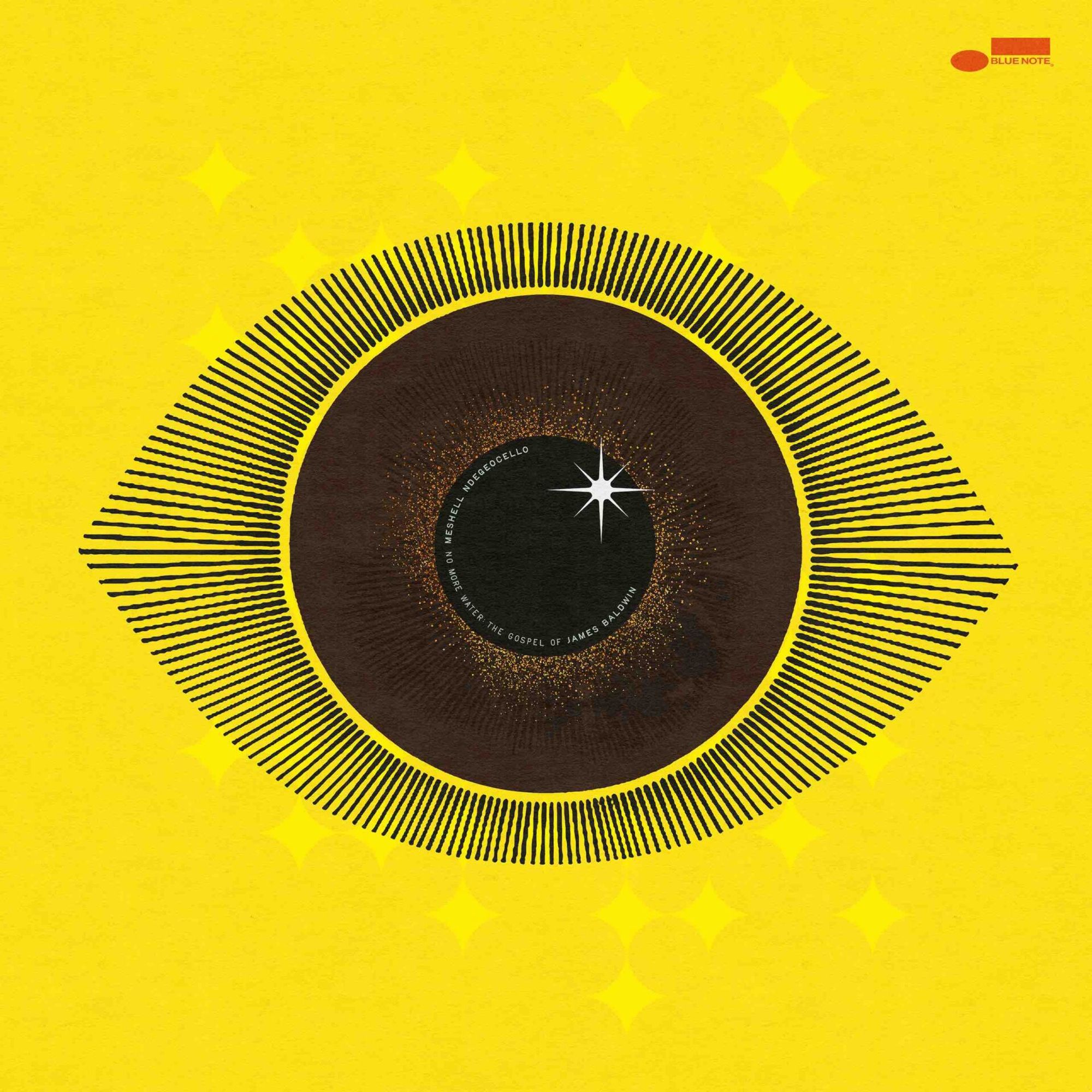
The cover art for Meshell Ndegeocello’s No More Water: The Gospel of James Baldwin (Blue Note, 2024).
Those words are music to Ndegeocello. Inspired by Baldwin’s most well-known essay, Ndegeocello’s piece, first staged as a church service, employed music, sermon, text, images, and movement, all of which entered into conversation with Baldwin’s monumental and delicate essay about how black bodies were perceived not only by white Americans but by blacks themselves. In the first part of the work, Baldwin wrestles with—without naming it—his homosexuality, and with the strain of being “saved,” when he knew, by virtue of his preference, that he was among the so-called “dispossessed.” And in going back to the sounds Baldwin made on the page, Ndegeocello mined those words that return Baldwin to his own body, his own voice, while creating music in her own name, too.
When I first saw the piece in 2016 at Harlem Stage, Ndegeocello’s performance put my heart in my throat. Because this was opera as a form of resistance. And music without rhetoric. “Eyes,” a song written and performed by Hicks, seemed to have been written from inside Baldwin’s body—the very body we had denied him in our veneration of him. But as Hicks sang, he gave Baldwin back to us, and oh, how we had missed him. It was not lost on many of us that afternoon that No More Water was being performed not too far from where Baldwin was born and raised, those Harlem streets that made him, even as they threatened to unmake him. Some folks never left the avenue. But when he died in 1984, they gathered, remembering Jimmy, with all those sounds and words that bring him right back to us, with his poppy-sized eyes, and his head in stories. What those folks on the avenue saw in him was hope, his queer Black body shot through with rainbows.
That’s what you hear in Ndegeocello's No More Water, too. That Jimmy body dug up; the bones wrapped in rainbow flags and stars: an honoring of the dead that do not stay dead. A legacy. Dig. The music Ndegeocello’s made here lets us hear how the dreams creeping out of his head got into her head and her various musicians, all those voices raised to give Jimmy back his body, that body he was always playing hide and seek with because who wanted to really see it when he was here, see it whole, and the language that went along with it? Language is music. And the music you hear in No More Water is Jimmy talking to Meshell and his words meeting the language of her sounds and then coming out again through a multitude of voices, a multitude of sounds and thoughts that bring Jimmy back and give him—finally—his whole and true self, that which he offered up, time and again, if only we knew then how to listen. ♦
Copyright (c) 2024 by Hilton Als. Used with permission of Hilton Als, Meshell Ndegeocello, and Blue Note Records. All rights reserved.
Subscribe to Broadcast